
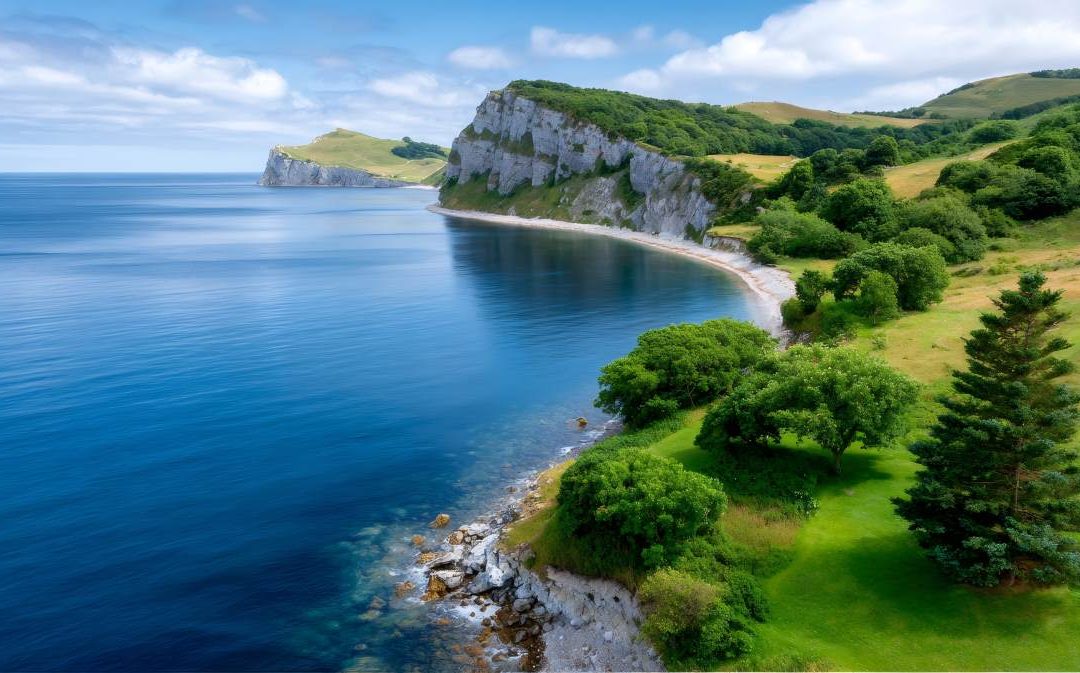
The Jurassic Coast alone is worth the trip – 95 miles of UNESCO World Heritage coastline with dramatic cliffs, fossil-hunting beaches, and coastal walks that are genuinely spectacular. Add picturesque villages, historic sites, and proper English countryside, and you’ve got a destination that delivers everything you want from a UK break.
Whether you’re planning a long weekend or a full week exploring the county, these are the places that should be on your Dorset itinerary.
Durdle Door and Lulworth Cove
Durdle Door is probably Dorset’s most photographed landmark – a natural limestone arch jutting into the sea that looks almost too perfect to be real. The walk down to the beach is steep but manageable, and the view from the clifftop is spectacular.
Lulworth Cove sits just along the coast – a near-perfect horseshoe-shaped bay with calm, clear water ideal for swimming (if you’re brave enough for English sea temperatures). The geology here is fascinating – you can literally see 185 million years of rock formations in the cliffs.
Get there early in summer if possible. Both spots get absolutely rammed during peak season, and parking fills up fast. Early morning or late afternoon visits give you better chances of enjoying them without battling crowds.
The South West Coast Path runs through here, so if you fancy a proper walk, you can hike between various coastal highlights whilst taking in stunning views.
Corfe Castle
Corfe Castle is a proper dramatic ruin – a Norman castle perched on a hill, partially destroyed during the English Civil War and left as romantic ruins ever since. The location is spectacular, dominating the landscape and visible for miles.
The village of Corfe Castle clustered around the base is quintessentially English – stone cottages, narrow streets, tea rooms, and that timeless feel that makes you forget what century you’re in.
National Trust manages the castle, so entry fees apply, but it’s worth it for the history and the views from the ramparts. On clear days, you can see across to the Purbeck Hills and down to the coast.
The Swanage Railway steam train stops at Corfe Castle station, which adds a bit of nostalgic charm if you fancy arriving by vintage train rather than car.
Weymouth
Weymouth is Dorset’s classic seaside town – sandy beach, Georgian harbour, fish and chips, the whole traditional British seaside experience. It’s popular with families because the beach is genuinely lovely – gently shelving sand, relatively calm water, and enough space that it doesn’t feel oppressively crowded even in summer.
The harbour area is picturesque with colourful buildings and plenty of restaurants and pubs. It’s touristy, absolutely, but in a pleasant, low-key way rather than the tackiness some seaside towns descend into.
Weymouth works well as a base for exploring the area. You’re close to the Jurassic Coast, Portland, and various countryside attractions whilst having all the amenities of a proper town.
Abbotsbury
Abbotsbury is a gorgeous village that most people visit for the Swannery – a colony of mute swans that’s been here since medieval times. During nesting season (late May through June), hundreds of swans are nesting, which is genuinely impressive.
The subtropical gardens are beautiful too – 20 acres of exotic plants that somehow thrive in this sheltered valley despite being in England. If you like gardens, it’s worth the visit.
The village itself is lovely – thatched cottages, ancient tithe barn, ruined abbey. It’s got that timeless Dorset village feel without feeling overly touristy or contrived.
St Catherine’s Chapel sits on a hill above the village – a 14th-century chapel with panoramic views over Chesil Beach and the countryside. The walk up is short but steep, and the views are brilliant.
Lyme Regis
Lyme Regis sits right on the Devon-Dorset border and has a completely different vibe from Dorset’s other coastal towns. It’s famous for fossils – Mary Anning made her paleontological discoveries here in the early 1800s, and you can still find fossils on the beaches today.
The Cobb is Lyme’s iconic harbour wall, made famous by The French Lieutenant’s Woman. Walking along it feels properly historic, and the harbour area with its independent shops and seafood restaurants is genuinely charming.
The beaches are pebbly rather than sandy, and fossil hunting works best at low tide after storms when new material gets exposed. Don’t take hammers to the cliffs – that’s dangerous and illegal – but you can find bits on the beach.
Lyme has kept its character better than many seaside towns. It feels like a real working town that happens to attract tourists rather than existing purely for tourism.
Sherborne
Sherborne is Dorset’s most beautiful market town – golden Ham stone buildings, medieval abbey, impressive castle, and a proper working town centre that hasn’t been completely overtaken by charity shops.
Sherborne Abbey is stunning – one of England’s finest abbey churches with incredible fan vaulting and 1,200 years of history. It’s still an active parish church, and entry is free (donations appreciated).
Two castles exist here: the Old Castle (ruins managed by English Heritage) and Sherborne Castle (still inhabited, with beautiful grounds designed by Capability Brown). Both are worth visiting if you’re into history and architecture.
The town centre is lovely for wandering – independent shops, cafes, and that relaxed market town atmosphere. Thursday and Saturday are market days if you want the full experience.
Brownsea Island
Brownsea Island sits in Poole Harbour and feels like stepping back in time. It’s a National Trust property accessible only by boat, which keeps visitor numbers manageable and creates this peaceful, removed-from-everything atmosphere.
The island has woodland walks, beaches, wildlife (including red squirrels, which are rare in southern England), and the remains of various historical sites. It’s properly tranquil – no cars, limited facilities, just nature and walking paths.
The island’s most famous as the birthplace of the Scout movement – Robert Baden-Powell held the first Scout camp here in 1907.
Ferries run from Poole Quay and Sandbanks during season (roughly April-October). The island closes during winter. National Trust admission fees apply unless you’re a member.
Portland
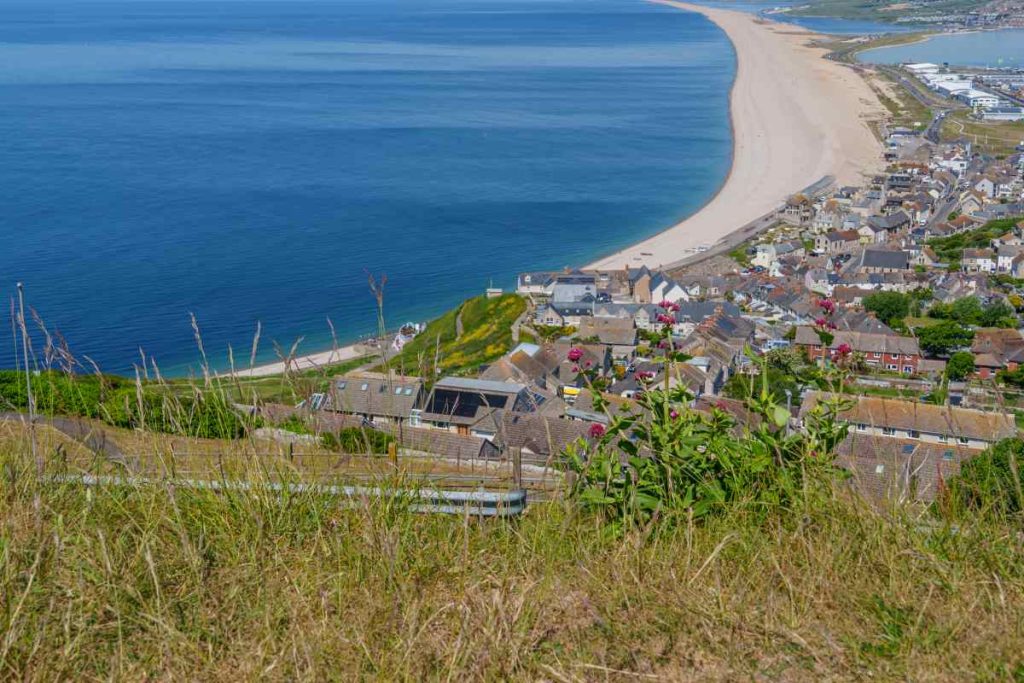
Portland is technically a tied island (connected to the mainland by a narrow strip), and it’s got a completely different character from the rest of Dorset. It’s rugged, windswept, and has this end-of-the-world feeling that’s quite dramatic.
Portland Bill lighthouse sits at the southern tip with spectacular coastal views and dangerous tidal races offshore. The area around it is perfect for coastal walks.
Portland stone comes from quarries here – it’s been used for St Paul’s Cathedral, the British Museum, and countless other significant buildings. You can see the quarries and learn about the stone’s history at the Portland Museum.
Chesil Beach connects Portland to the mainland – an 18-mile pebble beach that’s a remarkable natural feature. The pebbles grade in size along the beach’s length, which is genuinely fascinating if you’re into that sort of thing.
For those planning where to base themselves whilst exploring these destinations, choosing accommodation strategically helps you cover more ground without constantly packing and moving.
The Bottom Line
Dorset delivers stunning coastline, charming towns and villages, fascinating history, and proper English countryside without the crowds and commercialisation of some better-known destinations. And of course, family-friendly accommodation with hot tubs when you choose our retreats.
The Jurassic Coast is the star attraction – dramatic cliffs, fossil beaches, and coastal walks that rival anywhere in the UK. But the inland areas are equally worth exploring – market towns, castles, countryside that feels genuinely rural.
A week gives you time to explore properly without rushing. Long weekends work if you focus on specific areas rather than trying to cover the entire county. Base yourself centrally and you can day-trip to most highlights without spending hours driving.
Visit outside peak summer if possible – May, June, and September offer better weather than you’d expect and way fewer crowds than July-August. Dorset in spring or autumn can be absolutely beautiful whilst being pleasantly quiet.

Our Fact Checking Process
We prioritize accuracy and integrity in our content. Here's how we maintain high standards:
- Expert Review: All articles are reviewed by subject matter experts.
- Source Validation: Information is backed by credible, up-to-date sources.
- Transparency: We clearly cite references and disclose potential conflicts.
Your trust is important. Learn more about our Fact Checking process and editorial policy.
Our Review Board
Our content is carefully reviewed by experienced professionals to ensure accuracy and relevance.
- Qualified Experts: Each article is assessed by specialists with field-specific knowledge.
- Up-to-date Insights: We incorporate the latest research, trends, and standards.
- Commitment to Quality: Reviewers ensure clarity, correctness, and completeness.
Look for the expert-reviewed label to read content you can trust.
